

 Last Updated – August 29, 2026
Merel Family Law
Highland Park Domestic Violence Attorney
Providing Professional, Reputable and Approachable Legal Counsel.

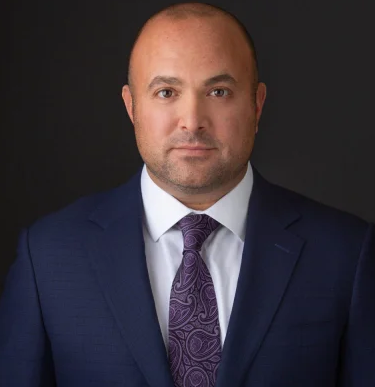
Written/Reviewed by:
Last Updated – August 29, 2026 Read Time – Est:
Highland Park Domestic Violence Attorney
Are you looking for a domestic violence attorney in Highland Park, IL?
At Merel Family Law, we are trusted domestic violence counsel for individuals and families throughout Highland Park.
If you need protection from an abusive partner in Highland Park, or you have been served with a petition naming you as a respondent, the order a judge enters will affect where you live and whether you can see your children. These matters move on a compressed schedule, and the first hearing frequently takes place before either side has counsel.
Our firm handles order of protection matters in Lake County. A Highland Park, IL domestic violence attorney at Merel Family Law can review the petition, explain what the court considers, and prepare the evidence your position requires. Consultations are confidential.
Domestic Violence Attorney Highland Park, IL
A domestic violence lawyer represents people on either side of a protective order proceeding. For a petitioner, that means establishing what happened and asking the court for specific relief. For a respondent, it means answering allegations that carry consequences for housing, employment, and parenting. Illinois treats these petitions as civil matters, which can proceed whether or not criminal charges exist.
Illinois domestic violence agencies provided 615,191 direct service hours to 51,456 survivors in state fiscal year 2024, according to InfoNet data maintained by the Illinois Criminal Justice Information Authority. In Lake County, one agency is dedicated exclusively to that work, and its advocates have staffed the county courthouse since 1984.
Types of Domestic Violence Cases We Handle in Highland Park
Protective order matters take several forms, and the legal positioning differs sharply depending on which side you are on. The cases below make up the bulk of the work our Highland Park domestic violence lawyers take on.
- Orders of protection. A protective order can bar contact, remove a person from a shared residence, and set terms for parenting time. Petitions are filed in the civil division and heard separately from any criminal case. We handle the petition itself and the hearing that follows.
- Emergency petitions. An emergency order can be entered without the other party present when the court finds the circumstances warrant it. The hearing is short, and the record made at it shapes everything afterward. We prepare petitioners for that hearing and appear with them.
- Defending against a petition. A respondent faces allegations that may affect custody, firearm rights, and access to a home. Answering them requires evidence rather than denial. We assemble the documentation and witnesses that address each allegation directly.
- Parenting time and abuse allegations. Findings in a protective order case carry into a parenting case, sometimes resulting in supervised exchanges. Custody after domestic violence depends on what the court finds, not on what is alleged. We coordinate both matters so the positions taken in each are consistent.
- Exclusive possession of the home. A court can order one party to leave a shared residence regardless of whose name appears on the lease or deed, and home rights frequently become the most contested part of a case. Where each party will live that night is a practical question the court answers immediately. We address it early rather than treating it as a detail.
- No-contact terms. Orders specify what contact is permitted, including messages sent through children or third parties. Terms that seem clear in court prove ambiguous later. We draft language that identifies what is and is not allowed.
- Violations and enforcement. When an order is disregarded, the response runs through the court rather than through direct contact between the parties. Documentation of each incident matters. We pursue enforcement and defend against alleged violations.
- Financial abuse. Control over accounts, credit, and income is a recognized form of abuse and often surfaces alongside a dissolution. We identify the financial conduct and address it within the relief requested.
Why Choose Merel Family Law as My Domestic Violence Attorney in Highland Park, IL?
Attorneys Who Handle Both Sides of a Petition
Josephine Norton practices family law in Illinois and earned her law degree from Chicago-Kent College of Law. Bradley R. Kaye practices family law in Illinois and earned his law degree from DePaul College of Law. Both are members of the Chicago Bar Association and the Illinois State Bar Association, and both handle protective order matters as part of a broader Illinois family law practice.
Representing petitioners and respondents means the firm understands how each position is built and where each tends to fail. A petition supported by dates, messages, and records is treated differently than one supported by recollection alone, and the same is true of a defense.
Support Alongside Legal Representation
Merel Family Law maintains an in-house divorce coaching program, which the firm introduced as an addition to traditional legal representation. Protective order cases are unusually demanding on the people living through them, and the legal work is only part of what a client is managing. The firm also maintains a Highland Park office, so clients working with a Highland Park domestic violence lawyer are not required to travel downtown for meetings about a Lake County case.
What Is Important To Understand About Domestic Violence Cases?
Orders of Protection and What They Cover
An order of protection is a civil remedy, and a judge can grant several kinds of relief in the same order.
- Contact restrictions. The order defines whether and how the parties may communicate, and through what channels.
- Residence. A court can grant one party exclusive possession of a shared home.
- Parenting time. Schedules can be suspended, supervised, or restructured while the order is in effect.
- Property and support. Temporary financial relief can be included where the circumstances call for it.
- Firearms. A protective order carries consequences for firearm possession under state and federal law.
Illinois defines abuse more broadly than physical harm alone, and what counts as abuse includes harassment, intimidation, and interference with personal liberty. The category of who may file also extends beyond spouses to household members, family, and people who share a child.
What Are Important Aspects of a Domestic Violence Case?
The details that determine an outcome are frequently the ones parties overlook. A few deserve early attention.
- Contemporaneous records carry weight, including messages, photographs, medical records, and police reports.
- The evidence family courts consider extends to communications the sender assumed were private.
- The precise wording of no-contact provisions determines what later counts as a violation.
- Findings entered in a protective order case follow the parties into any dissolution or parenting case.
- Financial abuse warning signs are often documented in account records rather than in anything either party said.
What Is The Domestic Violence Case Timeline?
These cases run on a different timeline than most family matters. A petition is filed at the courthouse. The court can consider an emergency order that same day, without the other party present, if the circumstances support it. The sheriff then serves the respondent with the order and notice of the next hearing.
That next hearing is where both sides appear and the court hears evidence. It may be continued once or more, particularly if either party retains counsel or if service has not been completed. If the court enters a longer-term order after that hearing, it sets an expiration date and can be asked later to extend, modify, or vacate what it entered. A parallel criminal case, if one exists, proceeds separately and on its own schedule.
What Should You Bring to Your Domestic Violence Consultation?
Bringing records allows us to give tailored legal advice to your situation.
- Any petition, order, or notice you have received or filed
- Messages, emails, and call logs relevant to the allegations
- Photographs, medical records, or police reports connected to specific incidents
- A dated list of the incidents at issue, in the order they occurred
- Any existing parenting order or divorce filing
A consultation is a working conversation. We review the facts, identify what the court is likely to focus on, and set out the options available on your side of the case.
Lake County Court and Local Resources
Highland Park matters are heard in the 19th Judicial Circuit at the Lake County Courthouse in Waukegan.
- The Administrative Office of the Illinois Courts publishes contact details and links for the Lake County Courthouse.
- The 19th Judicial Circuit explains its process for filing a protective order, including the online petition system and the in-person assistance available at the courthouse.
- The Lake County Circuit Clerk maintains court forms and procedures for the circuit, including links to the statewide standardized forms.
- A Safe Place is Lake County’s dedicated domestic violence agency and staffs court advocates inside the Waukegan courthouse.
- The Illinois Criminal Justice Information Authority publishes a directory of agencies providing victim services across the state.
Reach Out to Merel Family Law to Schedule a Consultation
Contact us to arrange a confidential consultation with a domestic violence lawyer serving Highland Park, IL. We will review the petition or the incidents at issue, explain how Illinois courts approach this relief, and describe what representation would involve. Meetings can be scheduled at our Highland Park office or remotely.
